Victoria's Granny Flat Rules: DPU Deadline Looms (Mar 2027)
Victoria's Dependent Person's Unit (DPU) rules expire on **March 28, 2027**. Understand the shift to 'Small Second Home' regulations, including new **60sqm** limits and permit requirements, to plan your project effectively.
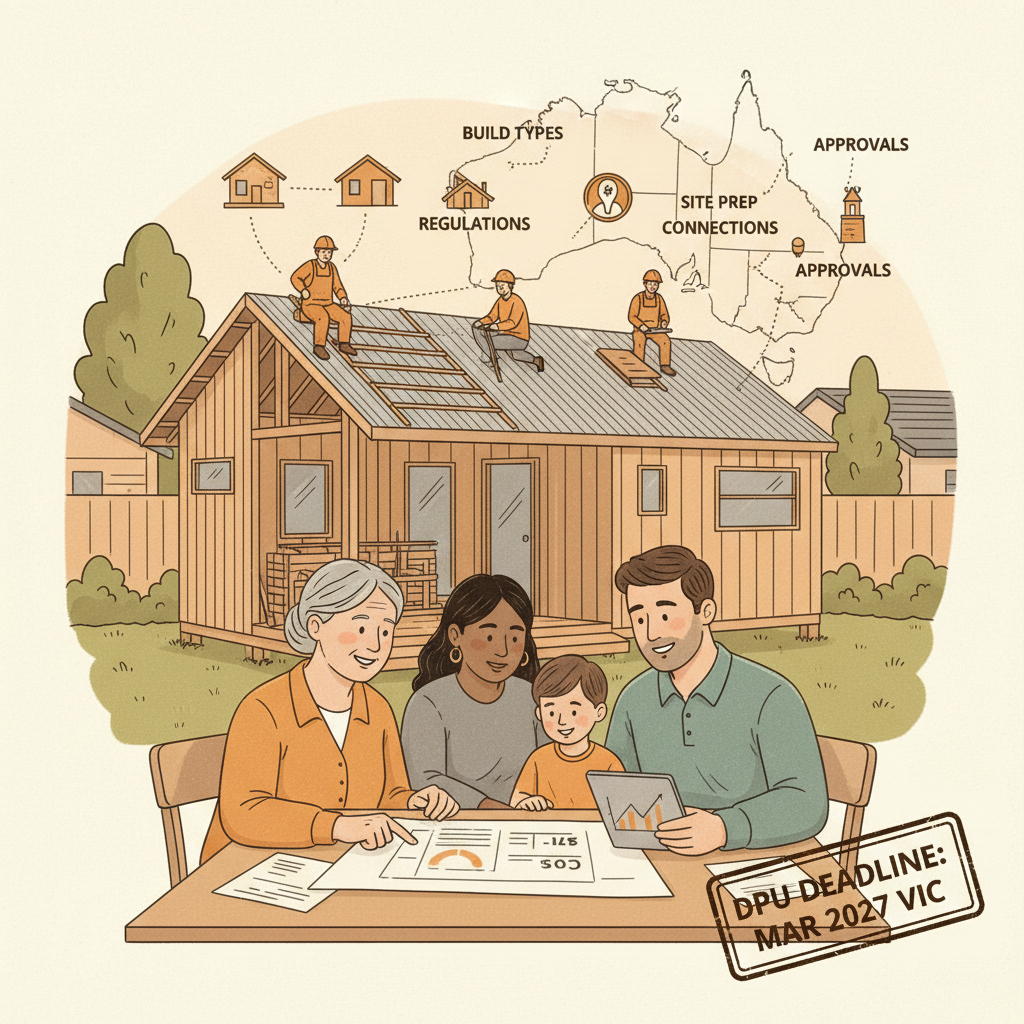
TL;DR: Victoria’s long-standing Dependent Person’s Unit (DPU) provisions will officially end on March 28, 2027. Future granny flat projects will fall under the new ‘Small Second Home’ rules. This often means more flexibility and no planning permit for dwellings up to 60sqm.
Key Takeaways
- 1. Victoria’s Dependent Person’s Unit (DPU) rules are expiring on March 28, 2027.
- 2. After this date, new secondary dwellings will be governed by the ‘Small Second Home’ provisions.
- 3. Small Second Homes can be up to 60sqm and, in many cases, will not require a planning permit if they meet specific criteria.
- 4. The DPU definition previously restricted occupancy to a dependent person, a rule removed under Small Second Home provisions.
- 5. This shift aims to simplify the Victoria granny flat permit process and open up rental opportunities for homeowners.
- 6. Homeowners with DPU projects currently underway or planned must understand this deadline to ensure compliance and avoid delays.
Victoria is changing how it handles secondary dwellings, commonly known as granny flats. For decades, the main way to build these units was through the Dependent Person’s Unit (DPU) provisions. But that’s changing, with a firm deadline of March 28, 2027.
This change completely alters how Victorian homeowners approach new granny flat builds, shifting to the more flexible ‘Small Second Home’ framework. Understanding these new Victoria granny flat rules is crucial for anyone planning a secondary dwelling project soon.
What are Victoria’s current DPU rules for granny flats?
Until the DPU Victoria deadline in 2027, a Dependent Person’s Unit (DPU) has been Victoria’s main legal term for what most people call a granny flat. A DPU is a movable building on the same lot as an existing house. It’s for someone dependent on an occupant of that main house. This dependency could be due to age, disability, or other support needs, as defined by the Victorian Planning Provisions.
Importantly, DPU rules often didn’t need a planning permit if specific conditions were met. These conditions usually included size limits (often up to 60sqm or less, depending on local council planning schemes), setback requirements, and that strict “dependent person” occupancy rule. Because of the DPU framework, granny flats couldn’t be rented out independently. This severely limited their financial benefit for many homeowners.
What is the DPU Victoria deadline and what happens then?
The DPU Victoria deadline is March 28, 2027. After this date, the specific Dependent Person’s Unit rules in the Victorian Planning Provisions expire. They won’t apply to new applications anymore. Any granny flat project started or approved under DPU rules must still follow those DPU regulations.
From March 29, 2027, new secondary dwellings will fall under the ‘Small Second Home’ framework. This means if you plan to submit a planning permit application or start building a granny flat after this date, your project must comply with the new Small Second Home rules, not the old DPU provisions. This deadline is crucial for ongoing projects. Any permits not secured under DPU rules by this date will need to be re-evaluated under the new framework.
What are the new ‘Small Second Home’ rules in Victoria?
Victoria’s new ‘Small Second Home’ rules are a big reform. They aim to simplify approvals and boost housing options. A Small Second Home is a second dwelling on a lot with an existing house, mainly for residential use. Crucially, it doesn’t have the DPU’s “dependent person” requirement. This new classification opens up rental income potential – something previously restricted under DPU rules.
Under these new Victoria granny flat rules, a Small Second Home can be up to 60sqm in gross floor area. Often, it won’t even need a planning permit from your local council. This is a huge benefit, making the approval process much faster and cutting down on costs and timelines. To qualify for this “no planning permit required” pathway, your Small Second Home must meet specific criteria, such as:
- Maximum floor area of 60sqm.
- Located on the same lot as an existing dwelling.
- Meeting specific setback requirements from boundaries (e.g., typically 1.0 metre from side and rear boundaries).
- Compliance with Building Regulations and siting requirements.
- Located in a residential zone.
For projects over 60sqm or those not meeting the “no permit” conditions, you’ll still need a Victoria granny flat permit (planning permit) from your local council. But even with a permit, dropping the “dependent person” clause makes these dwellings far more versatile. Our Approval Pathway Finder can help you determine the specific requirements for your property in Victoria, considering its zone and proposed size.
How will the shift from DPU to Small Second Home impact homeowners?
The shift from DPU to Small Second Home Victoria rules means several key things for homeowners:
- Increased Flexibility: With the “dependent person” requirement gone, you can build a secondary dwelling for many uses. This includes housing adult children, accommodating guests, or, crucially, renting it out to tenants. This opens up new income streams and helps with housing affordability.
- Simplified Approvals: For units up to 60sqm that meet all criteria, not needing a planning permit significantly speeds up the process and reduces bureaucratic hurdles. This can save you thousands in planning application fees and months of waiting.
- Property Value Enhancement: A compliant Small Second Home with rental potential can add serious value to your property. Both investors and owner-occupiers are increasingly looking for properties with dual income potential or flexible living arrangements.
- Cost Implications: While planning permit fees might be reduced or eliminated for some projects, you’ll still need to budget for building permits, site preparation, utility connections, and the build cost itself. Our Cost Calculator provides instant estimates for build costs, site prep, connections, council approvals, and contingency for all Australian states, including Victoria.
If you’re considering a DPU project now, act quickly. Finalise plans and secure necessary permits before March 28, 2027. Those planning for after the deadline can take advantage of the new Small Second Home rules, which offer greater freedom and potential financial benefits.
What is the difference between a DPU and a Small Second Home?
The main differences between a Dependent Person’s Unit (DPU) and the new ‘Small Second Home’ provisions in Victoria are in the table below. This comparison shows why these upcoming changes matter so much for homeowners.
| Feature | Dependent Person’s Unit (DPU) (Expires Mar 2027) | Small Second Home (From Mar 2027) |
|---|---|---|
| Primary Purpose | House a ‘dependent person’ on the main dwelling. | General residential use (no dependency requirement). |
| Occupancy | Restricted to a dependent family member. | Any occupant, including independent renters. |
| Rental Potential | Generally NOT permitted for commercial rental. | YES, can be rented out to generate income. |
| Maximum Size | Varies by council (often 60sqm or less). | Standardised at 60sqm gross floor area. |
| Planning Permit | Often NOT required if criteria met (DPU rules). | Often NOT required if criteria met (60sqm, siting). |
| Relevant Legislation | Victorian Planning Provisions (DPU Clause 52.22). | Victorian Planning Provisions (New Small Second Home Clause). |
| Flexibility | Limited due to dependency clause. | High, allows for diverse uses and rental income. |
How can GrannyFlatCost help you navigate Victoria’s new granny flat rules?
Understanding the new Victoria granny flat rules and the DPU Victoria deadline can be complex. We’re here to simplify this process for Australian homeowners.
We offer tools to help with your granny flat project:
- Cost Calculator: Get instant granny flat cost estimates for Victoria. These cover build cost, site preparation, utility connections, council approvals (including potential savings with ‘no planning permit’ options under Small Second Home rules), and contingency. This detailed breakdown helps you budget accurately.
- State Regulations Guide: Our detailed guide explains approval pathways, size limits, setback requirements, and recent reforms across all Australian states and territories, including Victoria’s Small Second Home rules.
- Approval Pathway Finder: Easily determine if your granny flat project qualifies for a fast-track, no-planning-permit pathway under the new Small Second Home Victoria rules. Or if it requires a full planning permit (DA) based on its size, state, and lot characteristics.
- Build Type Comparison: Compare the realistic total costs of prefab/modular, site-built, and kit home options. This ensures you understand the full financial picture beyond just advertised kit prices.
With the **March 2027 DPU deadline
Get your personalised cost estimate
Our calculator covers build cost, site prep, connections, approvals, and contingency for all Australian states.
Calculate Your Cost