Victoria's Granny Flat Revolution: Build, Rent, Invest (2026 Rules)
Victoria's new granny flat rules, effective March 2026, simplify building small second homes up to 60sqm without a planning permit. These reforms unlock significant rental income and investment opportunities for homeowners.
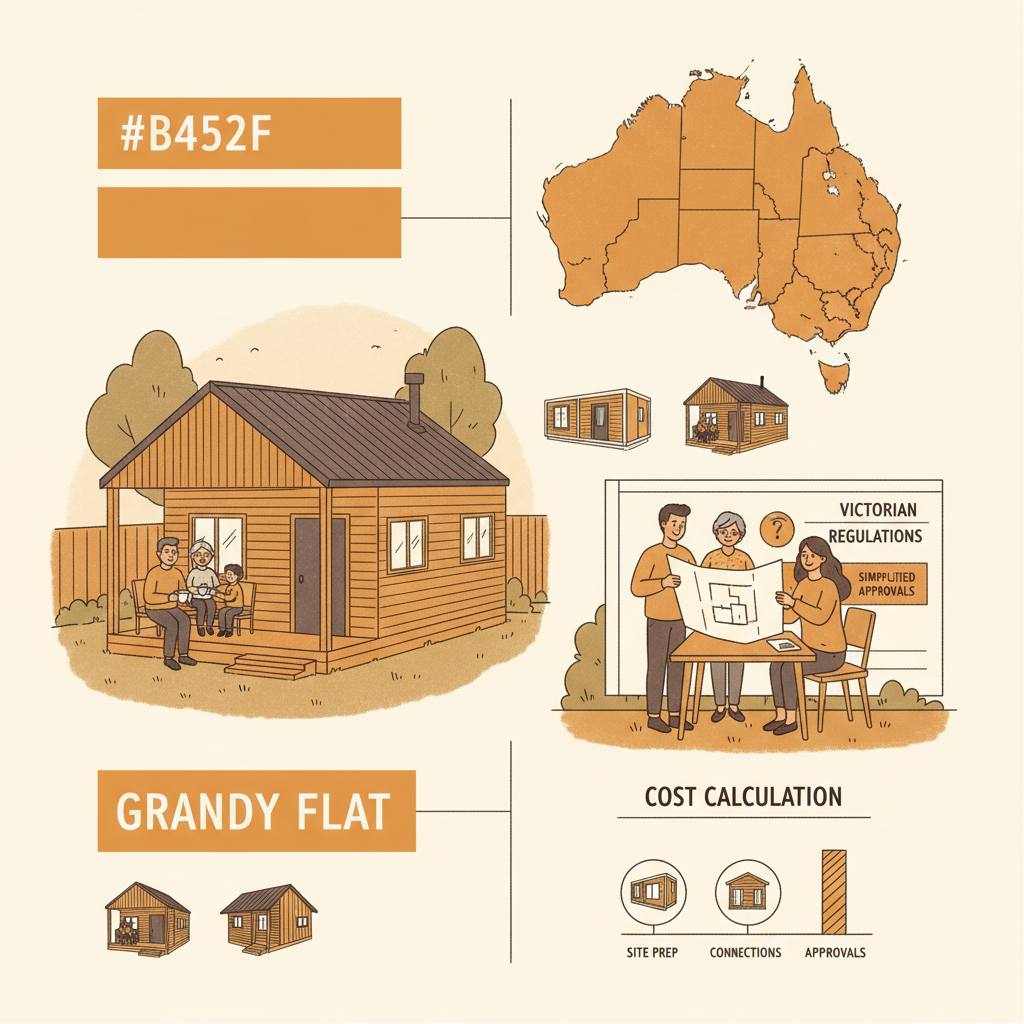
TL;DR: As of March 2026, Victorian homeowners can now build a ‘small second home’ (commonly known as a granny flat) up to 60sqm on properties larger than 300sqm without requiring a planning permit, provided specific setbacks and design standards are met. These new rules allow the granny flat to be rented out to anyone, creating significant opportunities for rental income and investment.
Key Takeaways
- 1. Victorian homeowners can now build a 60sqm secondary dwelling without a planning permit, provided it meets specific site and design criteria.
- 2. The new rules, effective March 2026, remove the previous requirement for the occupant to be a dependant or family member, allowing for rental to anyone.
- 3. Properties must be at least 300sqm and located in a residential zone to qualify for the planning permit exemption.
- 4. While planning permits are largely removed, a building permit is still required, ensuring structural integrity and safety standards are met.
- 5. These reforms position granny flats as a strong investment opportunity for generating rental income and addressing housing affordability in Victoria.
- 6. Understanding specific state regulations, including setback rules and maximum heights, is crucial for a smooth approval process.
What Are the New Granny Flat Rules in Victoria?
Victoria’s recent government changes, initially announced in December 2023 and fully confirmed and effective as of March 2026, have fundamentally changed the outlook for building granny flats. Homeowners can now construct a ‘small second home’ (the official planning term for a secondary dwelling or granny flat) up to 60 square metres on their property without needing a planning permit, provided it adheres to specific conditions. This marks a significant shift from previous regulations, which were often restrictive and complex.
Previously, granny flats in Victoria were typically subject to extensive planning permit processes, and their occupation was limited to dependants or family members. The new reforms simplify this by removing the planning permit hurdle for qualifying dwellings and, most importantly, enabling these secondary homes to be rented out to anyone, not just family. This brings Victoria in line with other states like New South Wales and Queensland, which have long had more permissive granny flat regulations.
How Do These New Rules Simplify Approvals for Victorian Homeowners?
The new Victorian granny flat rules substantially simplify the approval process by largely removing the need for a planning permit in most residential zones. This eliminates a major administrative and time-consuming step for many homeowners. Instead of dealing with the complex and often lengthy planning permit applications with local councils, homeowners will primarily focus on obtaining a building permit.
A building permit, issued by a private building surveyor or local council, ensures that your proposed granny flat meets essential safety, structural, and amenity standards outlined in the National Construction Code (NCC) and other Victorian building regulations. While a building permit is still mandatory, it is generally a more straightforward process than a planning permit. Our site’s Approval Pathway Finder can help you understand whether your specific granny flat project qualifies for this fast-track approach or if any unique site conditions might still require additional council engagement.
Can You Rent Out a Granny Flat in Victoria Under the New Regulations?
Yes, under the new Victorian regulations, you can absolutely rent out a granny flat to anyone, making them a strong option for granny flat investment Victoria and generating rental income. This change is one of the most significant aspects of the reforms, overturning the previous restrictions that limited occupation to family members or dependants. This freedom to rent out your secondary dwelling opens up new financial opportunities for homeowners.
For many, a granny flat offers an ideal way to boost passive income or contribute to mortgage repayments. It provides an additional dwelling on your existing land, which can be particularly attractive in areas with high rental demand. The ability to generate granny flat rental Victoria income means these structures are no longer just for family accommodation; they’re now viable investment assets. Our Cost Calculator can help you estimate the total costs, including build, site prep, connections, and approvals, allowing you to project potential rental returns more accurately.
What Are the Key Size and Setback Requirements for Victorian Granny Flats?
To qualify for the planning permit exemption under the new Victorian rules, your granny flat (or ‘small second home’) must meet specific size, setback, and site requirements. These guidelines are designed to ensure the dwelling is appropriate for residential areas and doesn’t negatively impact neighbours.
Key requirements include:
- Maximum Size: The granny flat cannot exceed 60 square metres in gross floor area.
- Site Size: The primary dwelling’s lot must be at least 300 square metres.
- Height: The dwelling must be single-storey and not exceed 5 metres in height.
- Setbacks: Specific minimum setback distances from boundaries apply, generally:
- Rear boundary: Minimum 3 metres.
- Side boundaries: Minimum 1 metre.
- Front boundary: Must be behind the building line of the existing primary dwelling.
- Site Coverage: The total site coverage of all buildings on the property, including the main house and the granny flat, must not exceed 60% of the lot area.
- Land Use Zone: The property must be located within a general residential zone, neighbourhood residential zone, or mixed-use zone.
These are general guidelines, and it’s always best to consult the specific details published by Planning Victoria or your local council for any additional overlays or specific conditions that may apply to your property. GrannyFlatCost’s State Regulations Guide provides up-to-date information across all Australian states and territories to assist with your planning.
| Requirement | Old Victorian Rules (Pre-2026) | New Victorian Rules (Effective March 2026) |
|---|---|---|
| Planning Permit | Often required, complex process | Not required (for qualifying projects) |
| Maximum Size | Varied by council, often restrictive | 60 square metres (gross floor area) |
| Occupancy | Limited to dependants/family | Open to anyone (including renters) |
| Minimum Lot Size | Varied | 300 square metres |
| Building Height | Varied | Single storey, max 5 metres |
| Primary Approval | Planning Permit + Building Permit | Building Permit only (for qualifying projects) |
| Goal | Primarily family support | Housing affordability & rental income |
How Much Does a Granny Flat Cost in Victoria with These New Rules?
The cost of building a granny flat in Victoria can vary significantly, typically ranging from $120,000 to $250,000+ for a complete, liveable dwelling, depending on size, build type, and finishes. While the new granny flat rules Victoria simplify the approval process, they don’t directly reduce the construction costs. However, by making approvals more efficient, they can reduce associated permit fees and holding costs by shortening the overall project timeline.
Total costs for a granny flat include more than just the build price. You must account for:
- Build Costs: This is the structure itself. Modular or prefab granny flats might have lower advertised base prices, but remember these often exclude site prep and connections. Site-built options offer greater customisation but can be more expensive upfront. Our Build Type Comparison breaks down realistic total costs for prefab/modular, site-built, and kit homes.
- Site Preparation: Costs for earthworks, retaining walls, levelling, and clearing can range from $10,000 to $40,000, especially on sloped blocks.
- Utility Connections: Connecting to water, sewer, electricity, and telecommunications is essential. These costs can be substantial, from $5,000 to $25,000+, depending on proximity to existing services.
- Council Approvals & Fees: While a planning permit may no longer be required, you will still need a building permit, building surveyor fees, and potentially other council contributions, which can total $5,000 to $15,000.
- Contingency: Always budget an additional 10-15% for unforeseen expenses.
For a personalised estimate covering all these elements, our Cost Calculator provides instant granny flat cost estimates, breaking down costs specific to Victoria, including site preparation, utility connections, and all necessary approvals.
Frequently Asked Questions
What is a ‘small second home’ in Victoria?
A ‘small second home’ is the official Victorian planning term for what is commonly known as a granny flat or secondary dwelling. It refers to an independent dwelling built on the same lot as an existing house, now permitted up to 60 square metres without a planning permit under new regulations.
Do I still need any permits for a granny flat in Victoria?
Yes, even though a planning permit is often no longer required for qualifying projects, you will still need a building permit from a registered building surveyor or your local council. This ensures your granny flat meets all structural, safety, and health standards under the National Construction Code.
How big can a granny flat be in Victoria without a planning permit?
Under the new rules, a granny flat in Victoria can be up to 60 square metres in gross floor area without requiring a planning permit, provided it meets other criteria such as site size, setbacks, and height limits.
Can I build a two-storey granny flat in Victoria under the new rules?
No, the new Victorian regulations specifically state that ‘small second homes’ qualifying for the planning permit exemption must be single-storey and not exceed a maximum height of 5 metres. If you wish to build a two-storey dwelling, it would likely require a full planning permit application.
Where can I find the official details of Victoria’s new granny flat rules?
The official details for Victoria’s new ‘small second home’ regulations can be found on the Planning Victoria website (planning.vic.gov.au), under reforms related to housing and planning permits. We recommend consulting these resources or contacting your local council for site-specific advice.
Unlock Your Victorian Property’s Potential Today
Victoria’s new granny flat rules offer a significant opportunity for homeowners looking to maximise their property’s value, generate rental income, or provide flexible accommodation for family. The simplified approval process and the ability to rent out these dwellings make them a strong investment.
Ready to explore the possibilities for your Victorian property? Use our free GrannyFlatCost Calculator to get an instant, comprehensive estimate tailored to your location and specific needs, including all build costs, site prep, connections, and approvals.
Calculate Your Cost Free → https://grannyflatcost.com/calculator
Get your personalised cost estimate
Our calculator covers build cost, site prep, connections, approvals, and contingency for all Australian states.
Calculate Your Cost