Prefab vs. Traditional: Decoding Granny Flat Cost Savings in 2026
Explore how prefab granny flats offer clearer, often lower costs compared to traditional builds in Australia. Compare financial advantages and cost transparency for modern build types across all states.
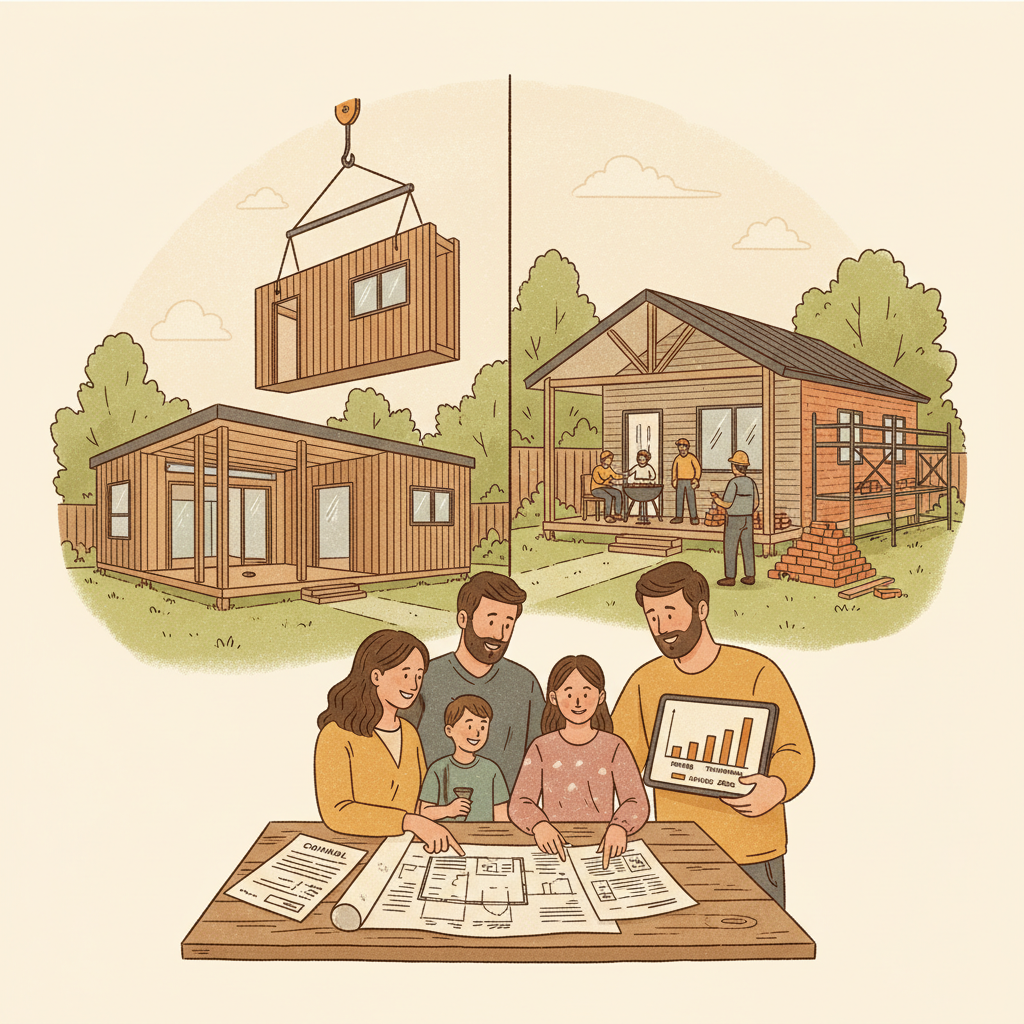
TL;DR: Prefabricated granny flats often offer 10-20% savings on total project costs in Australia due mainly to off-site construction. You can expect clearer pricing averaging $1,800 - $3,000 per sqm fully installed. This compares well to traditional builds, which often exceed $3,000 per sqm once all site-specific variables and potential delays are factored in.
Key Takeaways
- Prefabricated (prefab) granny flats generally offer more predictable costs and significantly faster build times than traditional site-built options.
- The total installed cost for a typical 60sqm prefab granny flat in Australia often ranges from $150,000 to $250,000 in 2026.
- Traditional granny flat builds can seem cheaper at first but frequently incur substantial cost overruns due to site work, weather delays, and unforeseen issues.
- It’s crucial to compare total installed project costs. This includes the build, site preparation, utility connections, and council approvals, not just advertised build prices.
- State-specific regulations, such as NSW’s Complying Development Certificate (CDC) rules or QLD’s Accepted Development pathways, greatly influence both approval timelines and overall project feasibility.
- GrannyFlatCost’s calculator provides comprehensive, state-specific estimates, covering all aspects from build costs to approvals, for both prefab and traditional build types.
What’s the Real Cost Difference Between Prefab and Traditional Granny Flats in Australia?
Prefabricated (prefab) granny flats typically offer a 10-20% cost saving compared to traditional, site-built methods. This is mainly because of efficient off-site construction and less labour time on your property. This efficiency directly affects the overall prefab granny flat cost Australia homeowners can expect in 2026. Building in a controlled factory environment minimises waste, allows for bulk material purchasing, and eliminates weather-related delays, leading to more predictable “prefabricated granny flat prices.”
A traditional, site-built granny flat, on the other hand, relies on individual trades working one after another on your property. This process can easily be delayed and incur unexpected costs. While initial quotes for a traditional build might seem competitive, they often don’t fully account for site-specific challenges or the rising costs of longer construction periods. Our independent calculator at GrannyFlatCost helps you compare these build types, giving you comprehensive estimates that factor in both the build and associated costs for a realistic granny flat build cost comparison.
How Do Modular and Traditional Granny Flat Costs Compare Across Australian States?
While the base per-square-metre rates for both modular and traditional granny flats vary across states, the relative cost transparency and efficiency of prefab generally hold true nationwide. For example, NSW, with its established granny flat market, often sees higher base costs for both types compared to, say, South Australia. However, the gains in efficiency from modular vs traditional granny flat cost remain consistent.
A secondary dwelling, commonly known as a granny flat, is subject to state-specific regulations that can influence overall project costs and timelines. For instance, in NSW, a granny flat up to 60sqm can often be approved via a fast-track Complying Development Certificate (CDC) under the State Environmental Planning Policy (Affordable Rental Housing) 2009. This makes the process quicker and potentially cheaper. You can find more details on the NSW Planning Portal: https://www.planning.nsw.gov.au/.
Queensland allows secondary dwellings up to 80sqm under “accepted development” pathways in some areas, potentially reducing approval complexities. These regulatory differences mean that while a 60sqm prefab might cost between $160,000 - $260,000 in NSW (including site prep, connections, approvals), a similar build in South Australia could be $140,000 - $240,000. Traditional builds typically fall into the $180,000 - $300,000+ range for a 60sqm dwelling across most capital cities.
The GrannyFlatCost platform provides a “State Regulations Guide” that details approval pathways, size limits, and setback requirements for all 8 states and territories. This helps you understand the local context for your project.
Granny Flat Build Cost Comparison: Prefab vs. Traditional (Estimated Total for 60sqm Dwelling, 2026)
| Build Type | Est. Build Cost (per sqm, shell) | Est. Total Project Cost (inc. site, connect, approve) | Typical Build Timeline | Key Advantages | Key Disadvantages |
|---|---|---|---|---|---|
| Prefab/Modular | $1,800 - $2,500 | $150,000 - $250,000 | 8-16 weeks | Faster construction, fixed costs, less site disruption | Limited customisation, potential craning costs |
| Traditional Site-Built | $2,500 - $3,500 | $180,000 - $300,000+ | 16-24+ weeks | Full customisation, integration with existing home | Slower, prone to delays, potential hidden costs, higher waste |
Note: Total project costs include average estimates for site preparation, utility connections, council approvals, and a 10% contingency for a straightforward site.
What Hidden Costs Do Traditional Granny Flat Builds Often Mask?
Traditional granny flat construction can accumulate hidden costs from unforeseen site conditions, longer build timelines, weather delays, and the higher hourly rates for on-site trades. These are often downplayed in initial quotes. Such unexpected expenses can significantly inflate the total granny flat build cost comparison. For instance, hidden rock formations needing extensive excavation, unexpected drainage problems, or difficult site access can easily add tens of thousands to a traditional build. A 2025 report by the Housing Industry Association (HIA) highlighted that over 35% of traditional residential builds experienced significant cost overruns due to site-specific challenges. You can find more industry insights on the HIA website: https://hia.com.au/.
In contrast, prefabricated builds still require proper site preparation, but most of the construction happens off-site. This means that once the foundation and connections are ready, the main build cost is largely fixed, and the structure installs quickly. GrannyFlatCost’s “Cost Breakdown” feature provides transparent methodology. It shows $/sqm rates, slope adjustments, access costs, and connection fees by state, helping you anticipate and budget for these variables accurately.
Can Prefab Granny Flats Really Offer Faster Approval and Build Timelines?
Prefabricated granny flats often have significantly faster build timelines. Factory construction can take as little as 8-12 weeks, with on-site installation sometimes completed within days. However, council approval processes generally remain similar to traditional builds. The efficiency of a factory assembly line reduces labour hours and allows for concurrent tasks, speeding up construction much faster than the sequential nature of site-built homes. Once the module is complete, it’s transported and craned into place, often in a single day.
While the build itself is faster, the council approval process for both prefab and traditional granny flats generally follows the same pathways: either a Complying Development Certificate (CDC) or a Development Application (DA). A Complying Development Certificate (CDC) is a fast-track approval that combines planning and construction approval into a single certificate for projects meeting specific criteria, like NSW’s 60sqm limit. A Development Application (DA), conversely, is a more detailed assessment typically required for projects that don’t meet CDC rules or involve more complex sites. You can learn more about how streamlined regulations are boosting off-site builds in our guide: /guides/off-site-granny-flats-get-a-boost-new-rules-for-faster-const. GrannyFlatCost’s “Approval Pathway Finder” helps you determine which pathway your granny flat qualifies for, potentially saving you time and money.
Is a Modular Granny Flat Always Cheaper Than a Site-Built One?
While modular granny flats typically offer a more cost-effective and predictable option, a granny flat build cost comparison shows that extremely basic, no-frills site-built options on perfectly flat, accessible sites might occasionally be as cheap as prefab prices. But this scenario is less common for standard projects needing reasonable finishes and modern amenities. It’s crucial to avoid the “kit home” trap. An advertised kit price (e.g., $40,000) can often balloon to 2.5 times that amount (e.g., $100,000+) once foundations, roofing, plumbing, electrical, interior fit-out, and council approvals are added.
The true value of a modular granny flat lies in its fixed price for the completed unit. This provides greater certainty and allows for better financial planning. Our “Build Type Comparison” feature on GrannyFlatCost helps you see realistic total costs, not just misleading advertised kit prices, ensuring you make an informed decision based on full project expenses. For personalised estimates, our Cost Calculator considers all these variables.
Frequently Asked Questions
What is the average cost of a prefab granny flat in Australia?
The average total cost for a fully installed prefab granny flat in Australia in 2026 typically ranges from $150,000 to $250,000 for a 60sqm dwelling. This depends on finishes, site complexity, and state. This figure includes the build, site preparation, utility connections, and council approvals.
How much do council approvals add to the cost?
Council approvals can add between $5,000 to $15,000 to your total granny flat cost. This depends on whether you qualify for a simpler Complying Development Certificate (CDC) or require a more extensive Development Application (DA). This cost covers application fees, surveys, reports (e.g., bushfire, flood), and certification.
Are kit homes the same as prefab granny flats?
No, kit homes are not the same as prefab granny flats. A kit home typically includes only the materials for the shell of the dwelling. This means you need to source and pay for all labour, foundations, plumbing, electrical, and interior fit-out separately. Prefab granny flats are largely constructed off-site in a factory, often arriving as a near-complete module ready for quick installation and connection.
What factors most impact the total cost of a granny flat?
The most significant factors impacting the total cost of a granny flat are its size, the chosen build type (prefab vs. traditional), the complexity of your site (slope, access, existing services), the quality of finishes, and state-specific regulations and connection fees. Site preparation and utility connections often account for a substantial portion of the overall budget.
Can I use a prefab granny flat for rental income?
Yes, absolutely. Granny flats, whether prefab or traditional, are increasingly popular for generating rental income across Australia. Many state regulations, such as the recent reforms in Victoria, actively encourage secondary dwellings to address housing shortages and boost rental supply, as discussed in our guide: /guides/victorias-granny-flat-revolution-new-rules-unlock-rental-inc.
Deciding between a prefabricated and a traditional granny flat build means weighing initial costs against long-term value, build predictability, and how transparent the expenses are. While traditional builds offer customisation, the often-unforeseen costs and longer timelines can significantly impact your budget. Prefabricated options, conversely, provide a clear, often lower total cost with faster delivery, making them an attractive option for many Australian homeowners in 2026.
To get a personalised, comprehensive cost estimate for your granny flat project, tailored to your specific location, build type preference, and site conditions, use our independent calculator.
Calculate Your Cost Free → https://grannyflatcost.com/calculator
Get your personalised cost estimate
Our calculator covers build cost, site prep, connections, approvals, and contingency for all Australian states.
Calculate Your Cost