Tasmania Proposes 50% Larger Granny Flats to Tackle Housing Crisis
Tasmania is set to increase its maximum granny flat size from 60sqm to 90sqm, a 50% jump aimed at tackling the housing crisis. This significant change will enable more 2-bedroom secondary dwellings across the state, offering improved housing options and affordability.
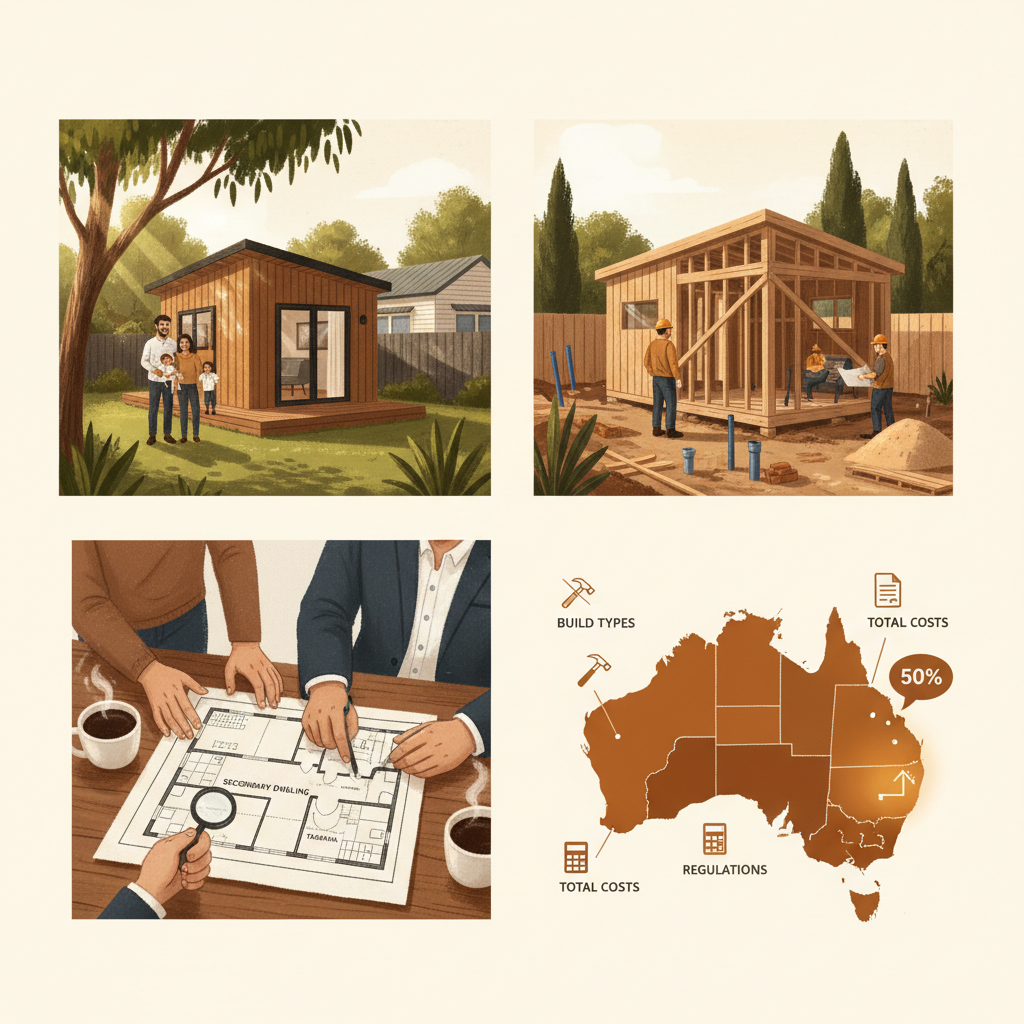
TL;DR: Tasmania’s government announced plans in March 2026 to increase the maximum allowable granny flat size by 50%, from 60sqm to 90sqm. This change aims to help the state’s housing crisis by making two-bedroom secondary dwellings easier to build, giving homeowners more options.
Key Takeaways
- Tasmania proposes to increase the maximum granny flat size from 60sqm to 90sqm.
- This 50% increase is designed to allow for the construction of more two-bedroom secondary dwellings.
- The change aims to address Tasmania’s pressing housing affordability challenges by increasing housing supply.
- The updated granny flat regulations Tasmania would bring the state’s size limits closer to other states like Queensland and Western Australia.
- Homeowners will gain greater flexibility in design, potentially boosting rental yields and accommodating larger families.
- Knowing these new Tasmania granny flat rules is key to accurately calculating your project’s total costs and navigating approval pathways.
Tasmania is addressing its housing crisis directly, announcing plans in March 2026 to expand the maximum allowable size for granny flats. This proposed change would see the limit jump by 50%, from the current 60sqm to 90sqm. This change offers homeowners new ways to add value, create more living space, or provide rental options.
What are the proposed changes to Tasmania’s granny flat rules?
The Tasmanian government announced plans in March 2026 to increase the maximum allowable size for secondary dwellings, commonly known as granny flats, from 60 square metres (sqm) to 90sqm. This 50% increase in permitted floor area is an initiative to provide more spacious and adaptable housing options across the state, as confirmed by a government statement regarding amendments to the Tasmanian Planning Scheme. Under current Tasmania granny flat rules, secondary dwellings often get limited to a single bedroom or a very compact two-bedroom layout. This limits their appeal and how useful they can be.
This proposed amendment to the Tasmanian Planning Scheme allows for much larger secondary dwellings. A 90sqm footprint enables a comfortable two-bedroom layout, complete with a functional kitchen, living area, and bathroom. It also aligns with broader efforts to simplify housing approvals and boost supply.
Why is Tasmania proposing larger granny flats?
Tasmania is proposing larger granny flats primarily to address its severe housing crisis and improve housing options and affordability across the state. The current 60sqm limit often restricts granny flats to single-bedroom units, which isn’t very useful for families or individuals needing more space. By increasing the limit to 90sqm, the government aims to facilitate the construction of more two-bedroom secondary dwellings.
The Tasmanian Housing Strategy outlines this change, which aims to open up underutilised backyard space for additional housing, according to a government press release in March 2026. Larger granny flats can fit more tenants, like small families or couples. This helps diversify the rental market and takes some pressure off primary housing. It also gives homeowners a more attractive option for multi-generational living or a good income stream.
How will larger granny flats impact housing affordability in Tasmania?
Larger granny flats are expected to impact housing affordability in Tasmania by increasing the supply of rental properties and offering more flexible living arrangements. By allowing for 2-bedroom secondary dwellings up to 90sqm, the state can use existing residential land to create new, more affordable housing units. These larger units can get higher rental yields than smaller 1-bedroom designs, making them a more attractive investment for homeowners looking to offset mortgage costs or generate income.
The availability of more two-bedroom granny flats will help ease demand for larger, more expensive rental properties, which could stabilise rents across the market. Furthermore, they provide a viable option for multi-generational living, enabling families to pool resources and reduce overall housing costs, as highlighted by housing analysts in the “Tasmanian Housing Market Update Q1 2026.” For homeowners calculating potential returns, the GrannyFlatCost calculator can project rental income alongside build costs, including site prep and connections.
What are the current granny flat size limits in other Australian states?
Granny flat size limits vary across Australia, with Tasmania’s proposed 90sqm bringing it closer to the more generous allowances seen in other states. While NSW generally limits secondary dwellings to 60sqm under Complying Development Pathways, states like Queensland often allow up to 80sqm for ‘accepted development’ in certain zones. Western Australia and South Australia also have varying limits, typically ranging from 60sqm to 70sqm, depending on council regulations and lot size.
This proposed change for how big can a granny flat be Tasmania puts the state in a competitive position for planning flexibility. This push for larger, more accessible secondary dwellings reflects changes in other regions, like New Zealand’s approach to consent-free expansions. That could be a model for Australian states (see: /guides/nzs-consent-free-granny-flat-expansion-a-blueprint-for-austr). For a detailed comparison and to understand granny flat regulations Tasmania against other regions, consult GrannyFlatCost’s State Regulations Guide. It breaks down approval pathways, size limits, and setback requirements for all Australian states and territories, helping homeowners compare their options nationwide.
| State/Territory | Typical Maximum Size (sqm) | Approval Pathway Example | Notes |
|---|---|---|---|
| Tasmania (Current) | 60 | Council DA | Often restricted to 1-bedroom |
| Tasmania (Proposed) | 90 | Council DA | Allows for comfortable 2-bedroom |
| New South Wales | 60 | Complying Development Certificate (CDC) | Fast-track approval common |
| Queensland | 80 | Accepted Development (subject to rules) | Council-specific variations |
| Victoria | Varies, often linked to main dwelling size | Council DA | No statewide max, can be larger in some areas |
| Western Australia | 70 | Exempt from DA in some areas | Dependent on specific council LPS |
What do these changes mean for your granny flat project in Tasmania?
These proposed changes for how big can a granny flat be Tasmania offer big opportunities for your granny flat project, allowing for more spacious and adaptable designs. With a potential increase to 90sqm, you can plan for a comfortable two-bedroom layout, making it suitable for larger families, long-term rentals, or even as a dedicated workspace. This expanded size might also boost your property’s resale value and offer a better income stream.
You’ll need to understand the specific Tasmania granny flat size limits and approval pathways. While the size limit is increasing, other rules like setbacks, site coverage, and parking requirements will still apply. These might vary slightly between local councils. GrannyFlatCost’s Approval Pathway Finder can help you determine whether your larger granny flat might still qualify for a streamlined approval process or if a full Development Application (DA) is required based on your specific lot and the finalised regulations. Our cost calculator also gives instant estimates covering build cost, site preparation, utility connections, and council approvals across all 8 states, including Tasmania.
Frequently Asked Questions
Will the 90sqm granny flat size limit be implemented immediately?
No, the proposed 90sqm limit for granny flats in Tasmania is currently a government proposal announced in March 2026. It needs to go through legislative processes and public consultation before becoming law. Homeowners should monitor updates from the Tasmanian Department of Planning for the official commencement date.
How much does it cost to build a 90sqm granny flat in Tasmania?
Building a 90sqm granny flat in Tasmania varies in cost, but typically ranges from $225,000 to $350,000+ AUD, including site preparation, utility connections, and council approvals. Factors like design complexity, site access, material choices, and the slope of your land will all influence the final price. Our GrannyFlatCost calculator provides personalised estimates for all build types.
Can I build a 2-bedroom granny flat in Tasmania under the current rules?
Under the current Tasmania granny flat rules with a 60sqm limit, building a comfortable 2-bedroom granny flat is tough; it often means very compact living spaces. The proposed 90sqm limit is specifically designed to make 2 bedroom granny flat Tasmania projects more viable and spacious, greatly improving how useful and appealing they are.
What are the setback requirements for granny flats in Tasmania?
Setback requirements for granny flats in Tasmania typically vary depending on your specific local council’s planning scheme and the zone your property is in. Generally, expect minimum setbacks from boundaries (for example, 900mm to 1.5m from side and rear, more from the front). Always check your local council’s Development Plan or use the GrannyFlatCost State Regulations Guide for specific details.
How do I find out the exact granny flat regulations for my property in Tasmania?
To find the exact granny flat regulations for your property in Tasmania, you should consult your local council’s planning scheme or contact their planning department directly. Resources like the Tasmanian Planning Scheme website also provide statewide frameworks. For a general overview of rules and approval pathways, our GrannyFlatCost State Regulations Guide is a good place to start.
Ready to Plan Your Larger Tasmanian Granny Flat?
Tasmania’s proposed increase to a 90sqm granny flat size limit is a big step towards addressing the state’s housing needs and giving homeowners more flexibility and value. This change could open up new opportunities for multi-generational living, rental income, or simply expanding your property’s usable space.
Whether you’re envisioning a spacious two-bedroom retreat or a comfortable home for extended family, understanding all the costs and regulations is essential. Don’t let planning complexity stop you.
Calculate Your Cost Free today! Get an instant, detailed estimate for your granny flat project in Tasmania. It covers build costs, site preparation, utility connections, and council approvals. Visit https://grannyflatcost.com/calculator to get started.
Get your personalised cost estimate
Our calculator covers build cost, site prep, connections, approvals, and contingency for all Australian states.
Calculate Your Cost